
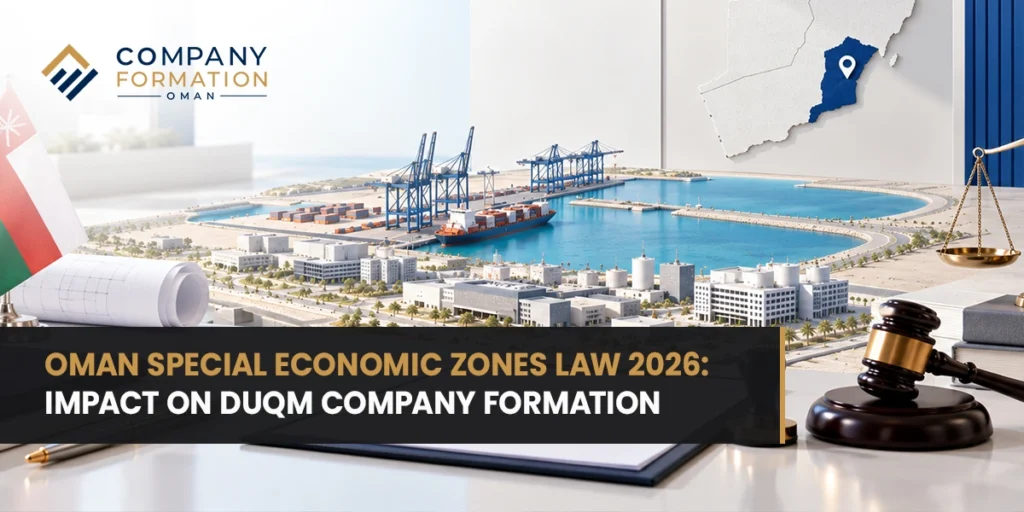
Duqm offers investors a strategic base for industrial development, manufacturing, logistics, and international trade. Oman’s updated legal framework for special economic zones and free zones makes the region an important option for businesses seeking a foothold in the Omani market.
The Oman Special Economic Zones Law, issued under Royal Decree 38/2025, established a unified framework for investment in these zones. In 2026, the Executive Regulations issued under Decision 81/2026 add further detail to licensing procedures, investment incentives, compliance obligations, and the treatment of strategic projects.
For businesses planning company formation in Duqm, these rules shape decisions from ownership and company registration to land allocation, tax planning and operational approvals. Foreign investors can benefit from provisions permitting full foreign ownership of eligible enterprises, while qualifying businesses can access tax incentives subject to the relevant conditions.
What Is the Oman Special Economic Zones Law?
Oman introduced the Law of Special Economic Zones and Free Zones through Royal Decree 38/2025, which came into force on 14 April 2025. The law provides a unified legal framework for special economic zones and free zones, including the Special Economic Zone at Duqm.
The framework covers company establishment, licensing, investment incentives, land use, customs arrangements and protections for investors. Its Executive Regulations, issued in 2026, establish more detailed procedures for implementing key provisions.
For businesses, the change creates a clearer legal basis for assessing investment opportunities and preparing applications. Companies can evaluate ownership options, licensing requirements and potential incentives against a defined framework rather than relying on assumptions about how free zone arrangements work.
How the Oman Special Economic Zones Law Affects Duqm Company Formation
The legal framework influences several decisions that directly affect the cost, structure and operation of a company in Duqm.
1. Foreign Investors Can Establish Wholly Owned Companies
The law permits full foreign ownership for eligible enterprises, operators and real estate developers within the relevant zones. This gives international investors greater control over their Omani operations and ownership structure.
A foreign manufacturer, for example, can assess establishing a wholly owned company for its planned Duqm facility rather than automatically seeking an Omani equity partner. The proposed activity must still qualify, and the company must complete the required registration and licensing procedures.
Ownership planning should account for more than shareholder percentages. Investors need to determine who will manage the company, how capital will be funded, which activities the company will undertake and whether additional sector approvals apply.
2. Minimum Capital Rules Offer More Flexibility
The law allows the competent authority to exempt eligible enterprises and real estate developers from minimum capital requirements prescribed under the Commercial Companies Law or other applicable legislation.
Before finalising the company structure, investors need to confirm the applicable capital rules, the availability of any exemption and the financial evidence required by the relevant authority. This prevents the business plan from relying on a capital arrangement that has not been approved.
3. Tax Exemptions Can Improve Investment Economics
Tax incentives are a major consideration when comparing Duqm with other investment locations. Under the law, eligible enterprises and operators can receive an income tax exemption for ten years from the commencement of business activity. Renewal for two similar periods is available for activities of a special nature, subject to the prescribed conditions.
The exemption does not cover every business. Specified exclusions include banks, financial institutions, insurance and reinsurance companies, telecommunications service providers, construction companies, and land and maritime transport companies operating in the zone.
Eligibility and approval conditions matter when calculating the expected return on an investment. A manufacturer, a construction contractor and a logistics operator cannot assume they will receive identical tax treatment simply because they operate in Duqm.
4. Licensing Procedures Have a More Defined Framework
The law establishes a one-stop shop framework for licences, permits, approvals and certificates. The 2026 Executive Regulations provide additional detail on processing, including automated licensing in eligible cases when the required information and conditions have been verified.
For a company establishing operations in Duqm, the licensing application needs to match the planned activity, ownership structure and operational requirements. Incomplete shareholder records, inconsistent activity descriptions or missing supporting documents can delay the process.
Industrial projects also need to account for approvals connected with their premises, facilities, environmental obligations and specialised activities. Commercial registration alone does not authorise every operation a company might plan to conduct.
5. Customs Arrangements Matter for Importers and Exporters
Duqm’s customs framework is particularly relevant to businesses importing equipment, sourcing raw materials, manufacturing goods or distributing products internationally.
The law sets out arrangements for goods entering, leaving and moving between the zone and Oman’s customs territory. Eligible transactions receive the treatment provided under the applicable customs rules.
Businesses must assess how their supply chains will operate before committing to a setup. A company exporting finished products internationally has different customs considerations from a distributor selling imported goods into Oman’s domestic market.
6. Investment Protections Support Long-Term Planning
The law includes protections relating to business assets, regulatory procedures and the transfer of investment proceeds. It also provides for the transfer abroad of profits and other investment-related amounts, including proceeds from the sale or liquidation of an enterprise, subject to applicable law.
These provisions matter to investors assessing how they will fund, manage and eventually restructure or exit their Omani operations.
The legal framework works alongside company agreements, financing arrangements, land agreements and regulatory obligations. Investors need to account for all of these elements when building a long term investment strategy.
Which Businesses Should Consider Company Formation in Duqm?
Duqm is relevant to businesses whose operating requirements align with the zone’s industrial infrastructure, development priorities and commercial opportunities.
| Business activity | Potential opportunity in Duqm | Main setup consideration |
| Manufacturing and industrial production | Establish production facilities and serve regional or international markets | Industrial site, utilities, equipment and environmental approvals |
| Logistics and distribution | Build warehousing, transport and supply chain operations | Customs procedures, transport links and customer markets |
| Import and export | Manage international trade and eligible zone based operations | Product classification and movement of goods into Oman’s customs territory |
| Energy and related industries | Develop eligible industrial and energy-related projects | Technical approvals, infrastructure and sector requirements |
| Tourism and real estate | Develop eligible property or tourism-related projects | Land rights, project permissions and applicable property rules |
| Large scale investment projects | Assess qualification for strategic project treatment | Investment value, economic contribution and formal approval |
Strategic Projects Under the 2026 Regulations
The 2026 Executive Regulations establish criteria for classifying strategic projects and determining whether they qualify for a single approval covering establishment, operation and management.
The stated investment cost threshold is at least OMR 10 million. A project must also meet at least one qualifying criterion related to its contribution to Oman’s economy. These considerations include technology and knowledge transfer, local content, self sufficiency, food and pharmaceutical security, and export development.
For companies planning major industrial or infrastructure investments in Duqm, this classification deserves attention during the initial planning stage. The project proposal should explain its investment value, operating model, employment contribution, technology transfer and wider economic benefits.
Oman Free Zone Company Formation: Documents to Prepare
The documentation for Oman free zone company formation depends on the company structure, shareholder profile, business activity and premises. Preparing the core records early helps keep the application consistent and reduces avoidable requests for clarification.
Documents include:
- Passport or identity documents for individual shareholders and authorised signatories, where applicable.
- Commercial registration records and constitutional documents for corporate shareholders.
- Board or shareholder resolutions authorising the investment and appointing an authorised representative.
- Proposed company name, legal structure and detailed business activity.
- Business plan or project description covering the proposed operation and investment requirements.
- Completed application forms and supporting commercial registration documents.
- Land, premises or usufruct documentation where the project requires a designated site.
- Technical documents and sector approvals required for specialised activities.
- Certified, authenticated or translated foreign documents where required by the relevant authority.
The exact checklist must be confirmed for the proposed company. A manufacturing facility, a trading operation and a real estate development project will not necessarily follow the same documentation process.
How to Complete Company Formation in Duqm
A well-prepared setup starts with the commercial plan and moves through the legal, licensing and operational requirements.
Step 1: Define the Business Activity
Identify the company’s intended activities, products or services, customer markets and operating model. Be specific about whether the business will manufacture goods, import products, provide logistics services, export finished products or carry out another activity.
The activity description determines the applicable licensing route and helps identify any specialised approvals.
Step 2: Select the Legal Structure and Ownership
Choose a structure that supports the proposed ownership, management and financing arrangements. Eligible foreign investors can assess full foreign ownership under the law.
Consider the company’s current investment and future plans, including additional shareholders, financing, expansion and changes in business activity. A suitable structure at registration helps prevent unnecessary amendments later.
Step 3: Confirm the Location and Facility Requirements
Identify the premises, land, utilities, storage, transport access and infrastructure needed for the operation. Industrial projects should assess site suitability and technical requirements before committing to a launch schedule.
Step 4: Prepare and Submit the Application
Compile the company details, shareholder records, resolutions, activity information and other supporting documents. Check that the same information appears consistently throughout the application.
Submit the application through the relevant authority or one stop shop process. Respond promptly to requests for additional information and confirm whether the proposed activity requires separate approvals.
Step 5: Secure Registration and Operational Approvals
Complete the commercial registration and obtain the licences required for the planned activities. Depending on the project, this can include land arrangements, technical approvals and specialised permits.
Before starting operations, verify that the company holds all permissions needed for its actual activities. Registration is an important milestone, but it does not replace every operational approval.
Step 6: Confirm Incentives and Establish Compliance Procedures
Confirm the company’s eligibility for tax exemptions and other benefits, including the relevant approval status and ongoing conditions.
Set up accounting records, tax reporting, licence renewal tracking, employment procedures and regulatory recordkeeping before the business begins operating. The law requires relevant enterprises to maintain records and documents for at least ten years, making a reliable record management system essential from the outset.
Tax Incentives in Duqm: What Businesses Need to Check
Tax exemptions can influence the financial case for establishing a company in Duqm, but the benefit must be assessed against the company’s actual activities and eligibility.
Before including an incentive in financial projections, confirm:
- Whether the business activity qualifies under the law and executive regulations.
- Whether the activity falls within an excluded category.
- Whether the authority requires a formal application or approval.
- When the exemption period begins and what conditions apply to renewal.
- Which tax returns, records and supporting documents the company must maintain.
- How transactions involving customers and suppliers in Oman’s customs territory are treated.
- Whether other taxes, licence charges or sector specific fees apply.
Common Mistakes to Avoid During Duqm Company Formation
Assuming All Companies Receive the Same Tax Benefits
The law sets out an incentive framework, not a universal exemption for every business. Confirm eligibility and exclusions before calculating expected savings.
Choosing a Company Structure Before Defining the Business
The legal structure needs to reflect the ownership model, activity, financing and expansion plans. Set these requirements first, then choose the structure that supports them.
Overlooking Site and Infrastructure Requirements
Industrial operations need suitable premises, utilities, equipment access and any required environmental approvals. Address these requirements before setting a launch date or committing to major expenditure.
Treating Commercial Registration as the Final Approval
Some activities require additional licences or technical permissions. Identify every approval required for the intended operation and complete the relevant steps before starting regulated activities.
Relying on Outdated Information
Older summaries of Duqm’s incentives and procedures might not reflect the latest implementation requirements. The 2026 Executive Regulations provide important detail, so use the current framework when preparing the application.
Leaving Compliance Until After Registration
Tax reporting, record retention, licence renewals and other obligations are part of running the company. Build compliance procedures into the setup plan rather than addressing them after operations begin.
How Company Formation Oman Supports Your Duqm Setup
Company Formation Oman helps investors organise the steps involved in establishing a business in Oman. Support can cover choosing a suitable company structure, preparing registration documents and identifying the licensing requirements connected with the proposed activity.
For a Duqm project, the process starts by defining the investment and matching it to the relevant legal and operational requirements. This includes assessing ownership options, identifying premises and approval needs, and checking the conditions attached to potential incentives. Explore our company formation services in Oman to plan the registration process around your business activity and investment goals.
FAQs
What is the Oman Special Economic Zones Law?
The Law of Special Economic Zones and Free Zones was issued under Royal Decree 38/2025 and came into force on 14 April 2025. It establishes the legal framework for investment, company licensing, incentives, customs arrangements and investor protections in Oman’s special economic zones and free zones.
What changed for Duqm company formation in 2026?
The Executive Regulations issued under Decision 81/2026 provide more detail on implementing the law. They address licensing procedures, automated processing, incentive conditions, compliance requirements and the criteria for strategic projects.
Can foreign investors own 100% of a company in Duqm?
Yes. The law permits full foreign ownership for eligible enterprises in the relevant zones. The company must still meet the applicable activity, licensing and registration requirements.
Does every company in Duqm qualify for a ten-year tax exemption?
No. Eligible enterprises and operators can receive a ten-year income tax exemption, with renewal available for qualifying activities of a special nature under the prescribed conditions. Certain business categories are excluded, and applicable approval requirements must be met.
How do I start company formation in Duqm?
Define the business activity, select a suitable legal structure, confirm the site and licensing requirements, prepare the supporting documents and submit the application through the relevant process. Complete any additional approvals required for the proposed operation before commencing business.