
Freezone Company Formation in Oman
Starting a business in Oman’s thriving economy requires the right legal foundation from day one. Freezone company formation in Oman gives your business a tax-efficient, strategically located base to operate, export, and scale, without the ownership restrictions and bureaucratic overhead that can slow down foreign investors. Whether you are entering Oman for the first time or expanding an international portfolio, Finsoul Network Oman offers the expertise to establish your freezone entity with precision and speed.
Why Freezone Company Formation Matters in Oman
Freezone company formation is more than a registration process; it is a strategic decision that unlocks tax advantages, full foreign ownership, and access to world-class infrastructure. Unlike mainland entities, a freezone company is established within a designated economic zone with streamlined licensing, reduced customs duties, and single-window government services designed to attract international investment.
By choosing the freezone route, investors gain 100% foreign ownership across all permitted activities, exemption from corporate tax for defined periods, simplified import and export procedures, and the ability to repatriate profits without restriction. It also positions businesses within logistics, industrial, and technology hubs that provide ready-made infrastructure and sector-specific ecosystems. In short, freezone company formation in Oman delivers the ownership freedom, cost efficiency, and operational speed that international investors need to grow confidently in one of the Gulf’s most stable economies.

Who Is Required to Register a Freezone Company
The following business types and investor profiles benefit most from this structure:
- Foreign investors seeking 100% ownership without the need for an Omani partner or sponsor
- Export-oriented businesses that require efficient customs clearance and duty-free import of raw materials and equipment
- Logistics and supply chain operators looking to leverage Oman's strategic location between Asia, Africa, and Europe
- Manufacturing companies seeking industrial land, utilities, and infrastructure within a dedicated zone
- Technology and digital businesses requiring modern, connected workspace within a purpose-built innovation hub
- Trading companies that source internationally and re-export regionally, benefiting from Oman's free trade agreements
- International businesses establishing a Middle East or GCC hub that demands full profit repatriation and minimal tax exposure
Freezone Company Formation Services in Oman
Oman’s freezones offer several structures designed to match different business models, investment scales, and operational requirements. Each setup option carries specific licensing, capital, and activity parameters that investors must evaluate carefully before proceeding.
Sohar Port Freezone Company Formation Services
Finsoul Network Oman assists businesses with company setup in Sohar Port Freezone, handling registration, licensing, documentation, and regulatory approvals to help investors establish operations efficiently within one of Oman’s leading industrial and logistics hubs.
Salalah Free Zone Company Formation Services
We provide end-to-end company formation support in Salalah Free Zone, including business registration, license processing, investor guidance, and compliance assistance, enabling companies to benefit from Salalah’s strategic trade and logistics advantages.
Special Economic Zone Company Formation Services
Finsoul Network Oman facilitates company incorporation within Oman’s Special Economic Zones by managing legal documentation, licensing procedures, and regulatory requirements, helping businesses establish a compliant and efficient operational presence.
Al Mazyunah Free Zone Company Formation Services
Finsoul Network Oman supports investors with company setup in Al Mazyunah Free Zone, overseeing registration, licensing, and compliance processes to help businesses leverage the zone’s strategic location and cross-border trade opportunities.
Al Dhahirah Economic Zone Company Formation Services
We assist companies with incorporation in Al Dhahirah Economic Zone, managing registration, licensing, and authority coordination. This zone offers strategic inland positioning for logistics, manufacturing, and regional distribution activities.
Al Rawdah Economic Zone Company Formation Services
We provide full setup support in Al Rawdah Economic Zone, including documentation, licensing, and compliance advisory. The zone is designed to attract diverse industries with tailored infrastructure and competitive incentives.
Key Benefits of Freezone Company Formation
Establishing a freezone company in Oman provides businesses with unmatched ownership rights, tax efficiency, and access to purpose-built trade infrastructure. This structure allows companies to operate with maximum financial flexibility, import and export at reduced cost, and build an internationally recognised presence within one of the GCC’s most strategically located economies.
100% Foreign Ownership Across All Approved Activities
A freezone entity in Oman does not require an Omani partner or local sponsor for any activity approved within the zone. This gives international investors complete control over equity, decision-making, and profit distribution without the commercial and legal complexities of shared ownership arrangements.
Corporate Tax Exemptions for Defined Periods
Businesses established within Omani freezones benefit from corporate income tax exemptions for periods typically ranging from five to thirty years, depending on the zone and activity type. This represents a significant cost advantage over mainland structures, particularly for businesses with high capital investment or long revenue ramp-up periods.
Full Profit and Capital Repatriation
Freezone companies in Oman face no restrictions on repatriating profits, dividends, or capital to shareholders’ home countries. This financial freedom is a key driver for international investors who require unobstructed access to their returns and the ability to manage group cash flow across multiple jurisdictions.
Duty-Free Import and Export
Businesses operating within Omani freezones benefit from customs duty exemptions on the import of raw materials, machinery, and equipment used in production or operations within the zone. Export activities are similarly exempted, creating a cost-effective environment for manufacturing and trading businesses targeting regional and global markets.
Challenges Businesses Face During Freezone Company Formation
Setting up a freezone company in Oman involves managing zone-specific regulations, activity approvals, and infrastructure agreements that can delay progress without expert guidance. Our consultants help clients overcome these specific challenges:
- Selecting the most suitable freezone based on activity type, location requirements, and long-term growth plans
- Understanding zone-specific capital requirements, land lease terms, and facility options
- Preparing and submitting complete documentation in line with each freezone authority’s requirements
- Managing multi-stage approvals when business activities span both freezone and mainland market access
- Managing the interaction between freezone regulations and Oman’s national investment laws
- Coordinating Ministry of Labour and Omanisation obligations for employees based within the zone
- Structuring tax registrations, VAT obligations, and annual compliance in line with Oman Tax Authority requirements
- Planning for commercial license renewals, lease agreements, and post-registration compliance across multiple government bodies
Start Your Freezone Company Formation in Oman Today
If you are ready to establish your business in one of Oman’s designated economic zones, act now before market opportunities pass. Freezone company formation in Oman gives you direct access to one of the Gulf’s most strategically located and commercially active trade environments. Our consultants will build a clear, personalised setup plan covering zone selection, legal structure, government filings, and post-registration compliance; so nothing is left to chance.
Freezone Registration Process In Oman
A structured formation process ensures every freezone company in Oman is established on a legally sound and commercially optimised foundation. Each stage is designed to accelerate approvals, reduce compliance risk, and position your business for sustainable growth within your chosen zone.
Initial Assessment and Zone Selection
Our consultants begin with a structured review of your business model, target activity, capital available, and operational requirements. We identify the most suitable freezone for your goals, whether that is Sohar Freezone, Salalah Free Zone, Knowledge Oasis Muscat, or another designated zone, and outline a clear timeline and cost structure before any paperwork begins.
Trade Name Reservation and Zone Authority Filing
We handle the trade name search and reservation through the relevant freezone authority, then prepare and submit all incorporation documents in line with zone-specific requirements. Our team manages all direct communication with the authority to avoid rejections and unnecessary processing delays.
Commercial Registration and License Issuance
Once incorporation documents are approved, we process your Commercial Registration and obtain the freezone business license covering your approved activities. We coordinate all correspondence with the zone authority throughout this stage and provide milestone updates at every step.
Facility Agreement and Infrastructure Activation
Depending on your activity, you will require a land lease, warehouse unit, office space, or virtual office within the zone. Our team assists with facility selection, lease negotiation, and the activation of utilities and connectivity services to meet operational requirements ahead of your license issue date.
Bank Account Opening and Post-Registration Support
After your freezone company is formally registered, Finsoul Network Oman assists with corporate bank account opening, advises on VAT registration obligations, and supports your initial workforce planning to meet applicable Omanisation requirements. We remain available for compliance questions throughout your first months of operation.
Cross-Border Trade Facilitation and Logistics Advisory
We provide guidance on customs procedures, bonded warehouse options, and international shipping routes available through Oman’s free zones. This ensures your company can leverage the strategic location of the Sultanate for regional distribution, global exports, and efficient supply chain management.
Expected Timeline and Cost
The cost of freezone company formation in Oman depends on your chosen zone, legal structure, activity type, and facility requirements. The table below provides general estimates to support initial planning. Actual costs and timelines vary based on your specific project scope, document readiness, and freezone authority processing times.
Engagement Type |
Estimated Timeline |
Estimated Cost Range (OMR) |
|---|---|---|
Freezone Sole Establishment
|
2 to 4 weeks
|
OMR 600 to OMR 1,500
|
FZ-LLC Formation (Standard)
|
3 to 6 weeks
|
OMR 1,800 to OMR 5,000
|
Branch of Foreign Company
|
5 to 8 weeks
|
OMR 2,500 to OMR 7,000
|
Holding Company Setup
|
6 to 12 weeks
|
OMR 4,000 to OMR 12,000
|
Disclaimer: The figures in this table are approximate estimates based on standard zone authority fees, professional service charges, and typical project timelines at the time of publication. They do not include facility lease deposits, sector-specific regulatory fees, document notarisation, certified translation charges, or fees imposed by third-party government bodies. Actual costs may differ based on your business activity, legal structure, required share capital, chosen freezone, and the processing timeline of the relevant Omani authorities.
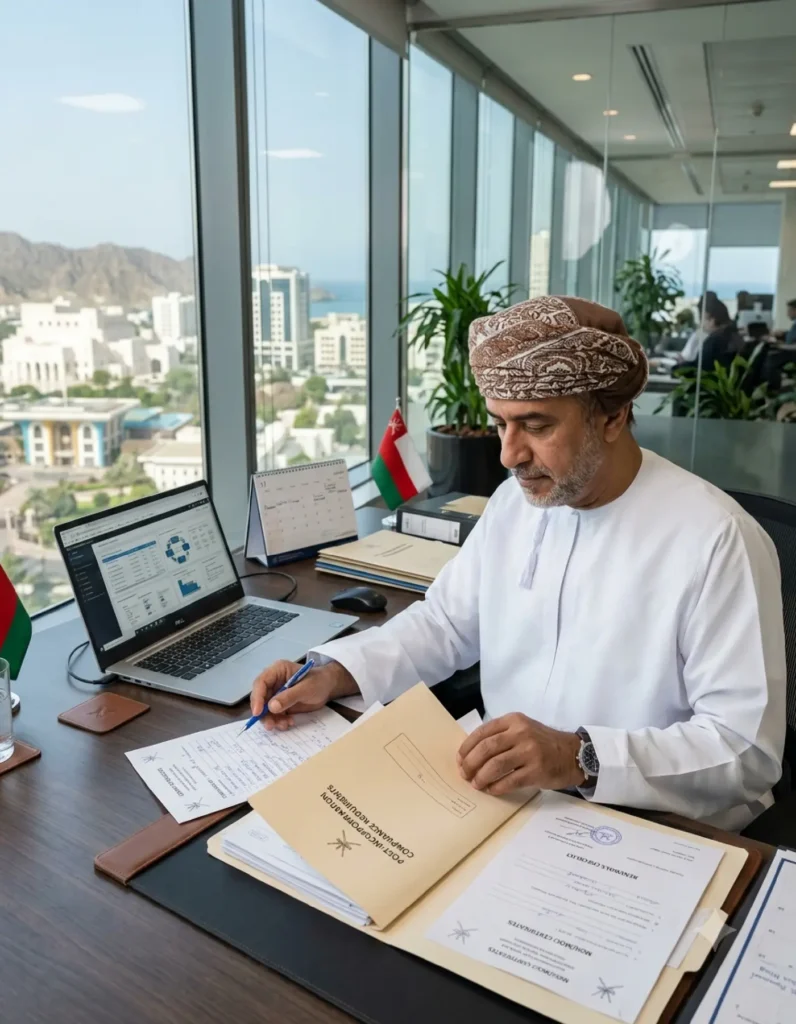
Post-Incorporation Compliance Requirements
Once a freezone company is incorporated in Oman, investors must meet several ongoing compliance obligations to maintain legal standing and operational continuity. VAT registration is mandatory for eligible businesses, ensuring proper tax reporting in line with Omani fiscal regulations. Opening a corporate bank account is essential for managing transactions and demonstrating financial credibility to regulators, partners, and clients.
Annual license renewal is a critical ongoing requirement, as failure to renew within the prescribed period can result in penalties, suspension of commercial activity, or cancellation of zone operating rights. Facility lease agreements must also be renewed and kept current to retain a legal presence within the zone. Labour registration with the Ministry of Labour is required to hire employees legally, while Omanisation obligations apply to businesses meeting applicable workforce thresholds. Together, these requirements form the backbone of post-incorporation compliance, protecting both regulatory standing and investor credibility.
Documents Required for Registration
To begin your freezone company setup in Oman, prepare the following documents and information in advance. Having these ready before engagement reduces processing delays significantly.
Document or Information |
Purpose |
|---|---|
Passport copies of all shareholders, managers, and directors
|
Identity verification for all company stakeholders
|
Proposed trade names (typically 3 options)
|
Trade name reservation through the freezone authority
|
Detailed business activity description
|
Determines correct license category and zone eligibility
|
Draft Memorandum of Association (MoA)
|
Confirms legal structure, ownership shares, and governance framework
|
Proof of registered office address or facility agreement
|
Satisfies physical presence requirements within the zone
|
Capital contribution or financial documentation (where applicable)
|
Supports compliance with zone-specific licensing or capital requirements
|
Corporate shareholder documents (if applicable)
|
Verifies legal standing of parent or investor entities
|
Sector-specific approvals or licences
|
Required for regulated industries operating within or from the zone
|
Authorities Governing Freezone Businesses in Oman
Freezone company formation in Oman is governed by a combination of zone-specific authorities and national regulatory bodies that ensure compliance, operational transparency, and legal recognition. Understanding which body governs each stage of setup and ongoing operations is essential for a smooth and compliant incorporation.
Freezone Authority (Zone-Specific)
Each freezone in Oman is governed by its own dedicated authority, which is responsible for trade name registration, commercial licensing, facility allocation, and zone-level compliance. The relevant authority varies depending on the zone — for example, Sohar Port and Freezone Authority for Sohar, or the Salalah Free Zone Company for operations in Dhofar. All freezone companies must complete their primary registration through their chosen zone authority before commencing legal operations.
Ministry of Commerce, Industry and Investment Promotion (MoCIIP)
MoCIIP provides overarching commercial regulation for business entities across Oman, including freezone companies where national-level registrations are required. Businesses that wish to conduct any activity involving the Omani mainland market alongside freezone operations may require additional MoCIIP registration and licensing.
Ministry of Labour
The Ministry of Labour oversees all employment-related compliance, including Omanisation ratios, work permit approvals, and labour contract registration. Freezone companies hiring employees within Oman must register their workforce with the Ministry before any employees start work. Non-compliance results in fines and restrictions on future hiring.
Oman Tax Authority
The Oman Tax Authority oversees corporate tax registration, VAT compliance, and tax reporting obligations for eligible freezone businesses. While many freezone companies benefit from tax exemptions during their qualifying period, VAT registration obligations apply based on taxable revenue thresholds and must be managed in parallel with zone-level compliance.
Industries We Serve in Oman
Freezone company formation in Oman is the preferred route for businesses seeking full foreign ownership, tax efficiency, and streamlined cross-border trade. Each industry faces unique regulatory and operational requirements, and our expertise ensures smooth setup and ongoing compliance.
Fintech
Startups and digital platforms leverage freezones to attract foreign investment, scale operations, and access international markets under flexible ownership structures
Hospitality
Hotels, resorts, and tourism ventures benefit from freezone licensing to expand services and attract global partnerships.
Construction
Contractors and developers use freezones to manage supply chains, import materials duty‑free, and expand operations across Oman.
Oil and Gas
Energy companies rely on freezones for logistics efficiency, tax advantages, and access to international trade routes.
Healthcare
Hospitals, clinics, and pharmaceutical ventures benefit from freezone licensing to import medical supplies and expand services with global partners.
E‑commerce & Retail
Freezone registration allows retailers and online platforms to operate internationally, strengthen investor confidence, and meet growing consumer demand.
Real Estate
Developers and property managers use freezones to attract foreign investors and manage projects with tax‑efficient structures.
Manufacturing
Factories benefit from freezones’ duty‑free imports, export incentives, and access to global supply chains.
Why Businesses Choose Finsoul Network Oman
When it comes to freezone company formation in Oman, investors and business owners choose Finsoul Network Oman because we combine deep regulatory expertise with practical, hands-on support at every stage of the setup process. Here is what sets our service apart:
We have completed hundreds of successful freezone and mainland registrations across Oman’s commercial, industrial, and technology sectors
Our consultants work directly with freezone authorities, MoCIIP, and the Ministry of Labour, reducing processing delays and minimising document rejections
Every engagement begins with a fixed-scope agreement, so you know exactly what is included before work starts
Our bilingual team communicates in both Arabic and English, removing language barriers with Omani authorities and freezone administrators
We provide independent, zone-neutral advice on freezone selection so your setup is matched to your commercial goals rather than any single authority’s preferences
Each client receives a dedicated relationship manager from initial consultation through to commercial license issuance
We provide ongoing post-registration support covering VAT registration, Omanisation planning, lease renewals, and annual license compliance
Client Success Story
The Challenge
A Singapore-based logistics group wanted to establish a regional hub in Oman to manage transhipment operations between Asia and East Africa. They required full foreign ownership, port connectivity, and a cost structure that would support a five-year regional expansion plan. Without guidance on freezone selection, they had initially applied to the wrong zone for their activity type, resulting in a rejected application and a two-month delay.
Our Approach
Our consultants evaluated the client’s cargo volumes, trade lanes, and infrastructure requirements and recommended Salalah Free Zone as the optimal location due to its direct port access and established logistics ecosystem. We prepared the complete incorporation package, managed the trade name reservation, coordinated the facility lease for a bonded warehouse unit, and submitted all documentation to the Salalah Free Zone authority within a single structured engagement.
The Outcome
The company received its freezone commercial registration and logistics license within five weeks of restarting the process under our guidance. Within six months of incorporation, the client had activated two warehouse units, established customs bonding arrangements, and processed its first transhipment cargo consignment through Salalah Port. The freezone structure delivered the full ownership control, duty exemptions, and port proximity the group needed to launch its regional hub on schedule.
Initiate Your Freezone Setup Consultation
Unlock tax advantages and 100% ownership with a free zone entity in Oman. Initiate a consultation with our advisors to select the right zone, prepare documentation, and fast‑track your registration process.
Frequently Asked Questions
Can a free zone company in Oman trade directly with the local market?
Freezone companies mainly operate within the zone or internationally. Direct trading in the Omani mainland usually requires a mainland license or a partnership with a licensed local distributor.
Is VAT applicable to freezone businesses in Oman?
VAT obligations depend on the nature of the business and turnover thresholds. Certain freezone and international transactions may qualify for VAT exemptions, subject to Omani regulations.
Can a freezone company sponsor employee visas in Oman?
Yes. Registered freezone companies can sponsor employee visas after obtaining approvals from the relevant authorities. Omanisation requirements may apply based on workforce size.
Can a freezone company convert into a mainland entity later?
No. Freezone and mainland companies are separate legal structures. Businesses seeking mainland operations must establish a new mainland entity.
Are there minimum capital requirements for freezone company formation in Oman?
Capital requirements vary by free zone, company structure, and business activity. Some activities have no minimum requirement, while others may require higher capital thresholds.